
Shipping Container Café Australia: Design and Setup Guide
A shipping container café can offer an alternative way to create a compact coffee shop, takeaway business or distinctive hospitality space in Australia. With a carefully planned layout, suitable equipment and an attractive exterior, a converted shipping container can become a functional commercial space for serving customers.
However, opening a shipping container café involves more than purchasing a container and installing a coffee machine. You need to consider site suitability, planning and building approvals, food safety, ventilation, plumbing, electrical services and the fit-out required for your menu.
This guide explains how to plan a shipping container café in Australia, what to consider when choosing a container and how to prepare for your project.
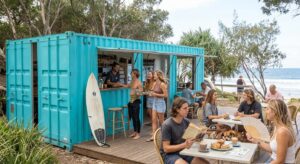
What Is a Shipping Container Café?
A shipping container café is a hospitality space created using a shipping container or a container-style modular structure. It can be designed for coffee preparation, takeaway food, customer service or a combination of food preparation and seating.
Depending on the design, a container café may include:
- A customer service window or counter.
- Coffee machines and beverage preparation equipment.
- Refrigeration and food storage.
- Workbenches and food preparation areas.
- Handwashing and other required sinks.
- Electrical and plumbing installations.
- Lighting, ventilation and suitable internal finishes.
- External signage, seating and shaded areas.
The final configuration depends on the menu, operating model, available site and applicable regulatory requirements.
Some businesses focus on takeaway coffee, while others serve light meals, pastries or a broader menu. Establishing the intended menu early helps determine the space, equipment and services required.
Why Consider a Shipping Container Café?
A container café may suit entrepreneurs, property owners and hospitality operators looking for an alternative commercial space.
Flexible layouts
Containers can be modified to include service counters, windows, doors, work areas and storage. The layout should be developed around the workflow of the café rather than simply fitting equipment into the available space.
Distinctive appearance
A container café can have an industrial, contemporary or minimalist appearance. External cladding, paint, signage, lighting and landscaping can help create a recognisable brand.
Potential for modular construction
Some fabrication and fit-out work may be completed before the container reaches its final site. This can help coordinate construction activities, although delivery, connections, site work and inspections may still be required.
Compact commercial spaces
A well-planned container can accommodate a focused takeaway coffee operation or a small menu. Space requirements increase when the business prepares more food, stores more ingredients or offers customer seating.
A range of possible locations
Potential locations include private commercial property, suitable retail sites, hospitality venues and other permitted commercial settings.
The suitability of any location depends on planning controls, landowner permission, access, utilities and the applicable approvals.
Shipping Container Café Design Ideas
The best design depends on how the business will operate, what it will sell and how customers will access the service.
1. Takeaway coffee container café
A takeaway coffee concept can be designed around a customer-facing service window, coffee preparation equipment, refrigeration, storage and a compact work area.
The layout should allow staff to prepare drinks efficiently while keeping customer service separate from food preparation activities where appropriate.
Consider where customers will queue, collect orders and dispose of waste. Also account for accessible paths and safe movement around the site.
2. Coffee and pastry kiosk
A coffee and pastry kiosk may need display refrigeration, storage for baked goods, packaging, a coffee machine and a suitable handwashing arrangement.
The space and equipment will depend on whether food arrives ready for sale, is reheated or is prepared on site. These activities can affect food safety requirements and the fit-out.
3. Container café with outdoor seating
An outdoor seating area can extend the customer experience beyond the container itself.
Consider weather protection, shade, pedestrian circulation, waste collection and the location of service counters. Check whether outdoor seating, signage or associated structures require additional permissions.
4. Container café with a larger food menu
A café preparing sandwiches, hot meals or other unpackaged food may need more extensive preparation space, refrigeration, cooking equipment, ventilation and cleaning facilities.
Plan the workflow carefully to prevent cross-contamination and ensure staff can work safely.
5. Branded container café
A strong visual identity can help distinguish a café from nearby competitors. Options include a coordinated colour scheme, external signage, lighting, menu boards and a landscaped customer area.
Check local signage rules and obtain any required permissions before installing signs or external structures.
Choosing the Right Shipping Container for a Café
Container size and condition should be selected according to the intended design, equipment and site.
Before purchasing, consider the following factors.
Available floor space
Prepare a preliminary layout showing the service counter, equipment, preparation benches, refrigeration, storage, sinks and staff circulation.
Allow space for cleaning, maintenance and safe access to equipment. A container that appears large enough from the outside may have limited usable internal space once the fit-out is installed.
Container condition
Used containers may require inspection and preparation before conversion. Consider corrosion, floor condition, previous use and the suitability of the materials for the intended commercial fit-out.
A container’s original cargo-storage function does not automatically establish that its surfaces or materials are appropriate for a food business.
Structural modifications
Cutting openings for service windows, doors or larger glazed areas can affect the container’s structural performance.
Have the proposed modifications assessed by an appropriately qualified professional. Reinforcement or other structural work may be necessary, depending on the design.
Insulation and internal finishes
Metal containers can transfer heat readily. Appropriate insulation, ventilation and moisture control are important for staff comfort, equipment operation and the protection of internal finishes.
Food preparation surfaces, floors and other finishes should also be suitable for their intended use and capable of being maintained hygienically.
Transport and installation
Check the delivery route, access restrictions, unloading space and ground conditions before ordering a container.
The proposed site must also accommodate the container’s final position and any required service connections.
Food Safety Requirements for a Shipping Container Café
Food safety must be considered during the design stage, not added as an afterthought.
Food Standards Australia New Zealand (FSANZ) explains that Australian food businesses must notify the appropriate food regulatory agency before commencing food handling operations. This requirement also covers many temporary and mobile food businesses, including those using portable buildings such as shipping containers.
Read the official FSANZ guide to starting or changing a food business.
Contact the relevant food regulator
Before opening, contact your local council or relevant food regulatory agency to establish the notification, registration or licensing steps that apply to your business.
The exact process varies by state, territory and local government area.
Plan hygienic food preparation areas
The layout should support safe food handling and minimise opportunities for contamination.
Depending on the menu and operating model, considerations may include:
- Suitable handwashing facilities.
- Appropriate food preparation and cleaning areas.
- Safe storage for ingredients and packaging.
- Refrigeration and temperature monitoring.
- Cleanable floors, walls, benches and equipment.
- Adequate lighting and ventilation.
- Suitable drinking-quality water.
- Safe wastewater and rubbish management.
- Separation of incompatible food preparation activities.
The required arrangement depends on the food handling activities and the applicable standards.
FSANZ provides further information about food safety standards.
Check food safety training requirements
Depending on the type of food business and activities performed, you may need a certified food safety supervisor and appropriate food handler training.
FSANZ explains the applicable categories and obligations in its guidance on food safety management tools.
Confirm the requirements with your local regulator before finalising the design.
Plumbing, Electricity and Ventilation
A container café often needs significant service installations to operate safely and efficiently.
Plumbing and water supply
The design may need handwashing facilities, sinks, hot and cold water, wastewater drainage and other plumbing fixtures appropriate to the menu and regulatory requirements.
Confirm how the site will provide drinking-quality water and manage wastewater. A property without existing services may require additional infrastructure.
Electrical systems
Coffee machines, refrigeration, cooking equipment, lighting and other appliances can create substantial electrical demand.
Have the electrical requirements assessed by an appropriately licensed electrician. The installation should be designed for the actual equipment and comply with applicable requirements.
Ventilation and cooking exhaust
The ventilation system should reflect the heat, moisture and cooking processes generated by the café.
A coffee-only operation may have different requirements from a kitchen using grills, fryers or other heat-producing equipment. Cooking exhaust, odour control and fire safety may need particular attention.
Check the requirements with the relevant building professionals and authorities before installing equipment.
Fire safety
Consider the proposed cooking equipment, electrical installations, fire risks, extinguishers, emergency access and any applicable fire safety provisions.
The requirements depend on the building, equipment and intended use. Obtain professional advice rather than assuming a standard container fit-out is sufficient.
Do You Need Council Approval for a Shipping Container Café?
A shipping container café may require several approvals or notifications, depending on its location, construction and intended use.
Placing a container on private property does not automatically mean that it can be operated as a café.
Before proceeding, ask the relevant authorities about the following.
Planning and land use
Confirm whether a café is permitted at the proposed location and whether a planning application or other permission is necessary.
Check zoning, site access, parking, operating conditions, signage and any applicable restrictions.
Building approval
A converted container used as a commercial premises may be subject to building approval requirements. The building classification, proposed fit-out, structural modifications and site conditions can affect the approval process.
Consult a suitably qualified building certifier or other relevant professional.
Food business requirements
Contact the appropriate food regulator about notification, registration, licensing and food safety obligations.
These are separate considerations from planning and building approval.
Utilities and site requirements
Confirm that water, wastewater, electricity, access and other site facilities are suitable for the proposed operation.
Additional permissions
Outdoor seating, advertising signs, footpath use, trading arrangements and other site features may have separate requirements.
For general information about business permits, consult business.gov.au’s licences and permits guidance.
If your café will operate in Queensland, start by contacting the relevant local council and checking the applicable planning and building requirements before purchasing or installing the container.
How Much Does a Shipping Container Café Cost?
The total cost depends on the container, fit-out, equipment, site and services. There is no single price that applies to every café.
Rather than comparing container purchase prices alone, prepare a project budget that includes the entire proposed operation.
Main cost categories
Container purchase: The size, condition and specifications of the container influence its price.
Design and engineering: Plans, structural assessments and professional services may be required.
Structural modifications: Service windows, doors, openings and reinforcement can add to the conversion cost.
Internal fit-out: Flooring, wall finishes, benches, cabinetry, storage and other finishes affect the final budget.
Café equipment: Espresso machines, grinders, refrigerators, display units and other appliances depend on the menu and service model.
Plumbing and electrical work: Service installations and upgrades depend on the site and equipment requirements.
Ventilation and fire safety: Cooking equipment and the proposed layout may require additional systems.
Site preparation: Foundations, drainage, access and ground preparation can influence project costs.
Delivery and installation: Transport distance, unloading equipment and installation requirements should be included.
Approvals and compliance: Allow for applicable applications, inspections, certification and professional advice.
Operating setup: Furniture, signage, packaging, payment systems, initial stock and other business expenses may also need to be budgeted.
How to compare quotations
Request itemised quotations from suppliers and contractors. Check whether the quotation includes the container, design, modifications, fit-out, equipment, transport, installation and service connections.
Ask for written confirmation of exclusions, payment milestones, lead times and how variations will be priced.
Do not assume that a container supplied with a service window or basic fit-out is ready to operate as a compliant food business.
Steps to Plan Your Shipping Container Café
Use the following process to organise your project.
Step 1: Define your café concept
Decide what you will sell, how customers will order and whether the business will focus on takeaway service or include seating.
Your menu will influence the space, equipment and food safety arrangements.
Step 2: Assess the site
Check the property’s suitability, access, utilities, drainage and potential restrictions. Confirm that the intended café use is permitted before committing to the site.
Step 3: Prepare a preliminary layout
Map the service counter, equipment, preparation areas, refrigeration, sinks and storage.
Use the layout to identify space constraints and discuss the proposed workflow with relevant professionals.
Step 4: Confirm approval requirements
Contact the planning authority, building certifier and food regulator as appropriate.
Identify the required applications, notifications, documentation and inspections before committing to the final fit-out.
Step 5: Select the container and fit-out team
Compare suitable container options and confirm who will manage structural modifications, equipment installation, services and certification.
Make sure the supplier and contractors understand the intended commercial use.
Step 6: Prepare the site and coordinate delivery
Arrange the necessary site works and ensure there is sufficient access for transport and unloading.
Coordinate the delivery date with the installation team and other contractors.
Step 7: Complete checks before opening
Confirm that the fit-out, services, food safety arrangements and required approvals are in place before trading.
Do not open until the applicable legal and regulatory requirements have been met.
Common Mistakes to Avoid
Buying the container before planning the layout
A container may be unsuitable if the equipment, preparation areas and required facilities do not fit safely within the available space.
Develop a preliminary layout before choosing the final container.
Assuming a container café is automatically mobile
A container may be relocatable, but its classification and approval requirements depend on its construction, placement and use.
Confirm the applicable requirements with the relevant authorities.
Overlooking food safety during design
Insufficient handwashing facilities, poor storage arrangements or unsuitable finishes can create compliance problems.
Involve the relevant professionals and food regulator before finalising the fit-out.
Underestimating service requirements
Water, wastewater, electricity, ventilation and other infrastructure can affect both cost and feasibility.
Assess these needs before purchasing the container.
Comparing prices without checking inclusions
Two quotations may cover very different scopes of work. Compare itemised costs and identify which services are excluded.
Ignoring site access
Restricted access can complicate delivery, unloading and future maintenance.
Check the site before ordering the container.
Frequently Asked Questions
What is a shipping container café?
A shipping container café is a hospitality business operating from a converted shipping container or container-style modular structure. It may serve coffee, takeaway food or a broader menu, depending on its design and facilities.
Can I open a café inside a shipping container in Australia?
Potentially, provided the proposed use and premises meet the relevant planning, building, food safety and other requirements. Confirm the rules for the location before purchasing or converting a container.
Do I need council approval for a container café?
You may need planning or building approval, food business notification or registration, and other permissions depending on the site and proposed operation. Requirements vary by jurisdiction, so check with the relevant authorities.
Does a shipping container café need a food business notification?
FSANZ states that food businesses must notify the appropriate food regulatory agency before commencing food handling operations. The relevant agency is usually the local council, although arrangements vary by jurisdiction. Confirm the process for your location.
What size shipping container is best for a café?
The appropriate size depends on the menu, equipment, preparation workflow, storage needs and site. A compact takeaway operation may need less space than a café preparing hot meals or accommodating customers indoors.
Can I use a second-hand shipping container for a café?
A used container may be suitable for conversion, but its condition, previous use, materials and proposed modifications should be assessed before purchase. The completed premises must meet the applicable requirements for the intended food business.
How much does it cost to build a container café?
Costs vary according to the container, modifications, equipment, fit-out, services, delivery and approvals. Request itemised quotations based on your actual site and proposed menu.
What equipment does a container café need?
Equipment depends on the menu and operating model. A coffee-focused business may need a coffee machine, grinder, refrigeration, preparation benches, storage and suitable sinks. A larger menu may require additional cooking, ventilation and food preparation equipment.
Explore Container Solutions at Container Supply Hub
Planning a container café starts with a clear concept, a suitable site and an understanding of the fit-out and compliance requirements.
Container Supply Hub offers shipping container and modular building products for Australian projects. The most suitable option will depend on your design, intended use, specifications and site conditions.
Explore our shipping container modifications page to learn more about modified container solutions, or browse our containers for sale.
If you are considering a container for a commercial project, contact Container Supply Hub for a quote. Include your intended use, preferred dimensions, delivery location and any available design details.
Confirm product specifications, availability, modification options and delivery arrangements before ordering.
Disclaimer: This article provides general information only and is not legal, planning, building or food safety advice. Requirements vary by state, territory, local council, site and intended use. Confirm current requirements with the relevant authorities and qualified professionals before purchasing or installing a shipping container café.