
Shipping Container Sizes in Meters: 7 Key Dimensions
Understanding shipping container sizes in meters helps you choose the right container for storage, transport, commercial use or a container conversion project in Australia. Common options include 10ft, 20ft and 40ft containers, with high cube models offering additional internal height.
A standard 20ft shipping container is approximately 6.06 metres long, 2.44 metres wide and 2.59 metres high externally. A standard 40ft container is approximately 12.19 metres long, with a similar external width and height.
These are typical measurements, not guaranteed dimensions for every container. Internal space, door openings and specialist models can vary, so check the specifications of the actual unit before purchasing.
In this guide, you’ll compare common container dimensions, understand the difference between internal and external measurements, and learn how to select a suitable size for your project.
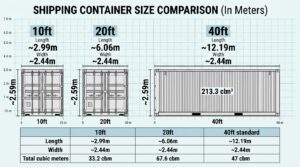
Table of Contents
- Shipping container sizes in meters: comparison table
- 10ft shipping container dimensions
- 20ft shipping container dimensions
- 40ft shipping container dimensions
- Standard versus high cube containers
- Internal versus external dimensions
- Choosing the right container size
- Delivery and site preparation
- Frequently asked questions
Shipping Container Sizes in Meters: Comparison Table
The following table shows typical external dimensions for common general-purpose container formats.
| Container type | Approx. external length | Approx. external width | Approx. external height |
|---|---|---|---|
| 10ft standard | 2.99 m | 2.44 m | 2.59 m |
| 20ft standard | 6.06 m | 2.44 m | 2.59 m |
| 20ft high cube | 6.06 m | 2.44 m | 2.90 m |
| 40ft standard | 12.19 m | 2.44 m | 2.59 m |
| 40ft high cube | 12.19 m | 2.44 m | 2.90 m |
Dimensions are approximate examples. Some 10ft units are modified from larger containers, and specialist containers can have different measurements. Confirm the actual product specifications before ordering.
If you are comparing sizes and prices, read our Shipping Container Sizes and Prices Australia guide.
10ft Shipping Container Dimensions in Meters
A typical 10ft shipping container measures approximately 2.99 metres long, 2.44 metres wide and 2.59 metres high externally.
Its compact footprint can be useful when a larger container would take up too much space.
What is a 10ft container used for?
Depending on the container’s design and condition, it may be suitable for:
- Tools and equipment storage.
- Business stock and supplies.
- Workshop materials.
- Smaller construction-site storage needs.
- Storage on sites with limited available space.
Before choosing this size, check the internal dimensions and door opening. Shelving, insulation or other modifications may reduce the available space.
Explore our 10ft shipping containers to compare available options.
20ft Shipping Container Dimensions in Meters
A standard 20ft shipping container is approximately 6.06 metres long, 2.44 metres wide and 2.59 metres high externally.
It is a popular size for storage, business inventory, tools, equipment and some container conversion projects.
Typical internal dimensions of a 20ft container
A conventional 20ft general-purpose container commonly has approximate internal dimensions of:
- Internal length: 5.90 metres.
- Internal width: 2.35 metres.
- Internal height: 2.39 metres.
These measurements are indicative. The actual usable space depends on the individual container’s construction, flooring and design.
Is a 20ft container the right size?
A 20ft container can provide a practical balance between storage capacity and site footprint. However, suitability depends on what you intend to store and how you need to access it.
Consider the dimensions of your largest items, the arrangement of shelving and the space required to load or unload goods.
Browse our 20ft shipping container range. If you are exploring a container-based cabin project, you can also view the 20ft off-grid container cabin.
40ft Shipping Container Dimensions in Meters
A standard 40ft shipping container measures approximately 12.19 metres long, 2.44 metres wide and 2.59 metres high externally.
Its additional length can be useful when you need more floor space or need to store longer items.
Typical internal dimensions of a 40ft container
A conventional 40ft general-purpose container commonly has approximate internal dimensions of:
- Internal length: 12.03 metres.
- Internal width: 2.35 metres.
- Internal height: 2.39 metres.
Always check the actual unit’s specifications before planning a storage layout, installing equipment or arranging transport.
Common uses for 40ft containers
Depending on the condition and configuration, a 40ft container may be suitable for:
- Larger quantities of stock and equipment.
- Commercial and industrial storage.
- Building materials and long items.
- Construction-site storage.
- Projects that require a larger container footprint.
Remember that a longer container also needs adequate delivery access and room for positioning. Measure the site and access route before deciding that a 40ft unit is the best option.
You can compare other options in our complete shipping container range.
Standard Versus High Cube Shipping Containers
A high cube container is taller than a standard-height container of the same nominal length.
A typical high cube container measures approximately 2.90 metres high externally, compared with approximately 2.59 metres for a standard-height model.
| Feature | Standard container | High cube container |
|---|---|---|
| Approx. external height | 2.59 m | 2.90 m |
| Approx. external width | 2.44 m | 2.44 m |
| Common external lengths | 6.06 m or 12.19 m | 6.06 m or 12.19 m |
The additional height can help when storing taller goods or planning certain conversions. It does not mean every high cube model has the same internal dimensions.
Confirm the available height, door opening and internal clearance for the specific container you intend to purchase.
Internal Versus External Container Dimensions
Understanding the difference between internal and external measurements helps you avoid selecting a container that is too small for your needs.
External dimensions
External dimensions measure the outside of the container. They matter when checking whether the unit will fit on a property, whether there is enough clearance and whether the delivery vehicle can access the site.
For example, a standard 20ft container is approximately 6.06 metres long externally.
Internal dimensions
Internal dimensions describe the usable space inside the container. They are smaller because the walls, roof structure, floor and door framing take up space.
A typical 20ft general-purpose container has an internal length of around 5.90 metres, rather than the full external length.
Door opening dimensions
The door opening can be narrower or shorter than the internal dimensions. This matters when loading pallets, machinery, furniture and other bulky items.
Measure your largest items and compare their dimensions with the actual door opening. Leave adequate clearance for safe handling.
Why container dimensions can vary
Measurements can differ because of:
- Manufacturer and container model.
- Standard or high cube design.
- Refrigeration equipment and internal lining.
- Door and frame construction.
- Flooring, repairs and modifications.
For close-fitting loads or conversion projects, use the supplier’s specification sheet and confirm the actual measurements before making final decisions.
For more information about identifying container types, consult the Bureau International des Containers guide to container size and type codes.
How to Choose the Right Shipping Container Size
The best container size depends on what you need to store, where the unit will be placed and how you plan to use it.
1. Measure the items you need to store
Record the length, width and height of your largest items. Consider how you will arrange them and whether you need space for shelving, access or handling equipment.
2. Measure the available site
Use the container’s external dimensions when checking the installation area. Allow room for the delivery vehicle, placement equipment and safe access.
3. Consider future storage needs
If your stock or equipment requirements may increase, compare the cost and practicality of a larger unit against adding another container later.
4. Select the right container type
A standard dry container may suit general storage, while other applications may need specialist features.
For example, temperature-sensitive goods may require a refrigerated shipping container. Flat rack and modified containers have different features, so assess the exact product against your intended use.
5. Compare condition and price
Newer and used containers can differ in appearance, condition, availability and cost. Inspect the doors, floor, roof and walls, and ask about repairs or modifications.
Our Shipping Container Grades and Condition Guide Australia explains what to consider when comparing container condition.
Shipping Container Delivery and Site Preparation
Knowing the dimensions in metres is only part of planning a successful installation. Delivery access and site preparation also matter.
Before arranging delivery, check:
- The actual external length, width and height.
- The access route and turning space.
- Ground stability and the proposed placement surface.
- Overhead wires, trees and other obstacles.
- Space needed by the delivery vehicle and equipment.
- Any site restrictions affecting placement.
A container may fit in its final position but still be difficult to deliver if the vehicle cannot access the site or safely position the unit.
Read our Shipping Container Delivery and Site Preparation Australia guide and review our Australia-wide delivery information before finalising your order.
Frequently Asked Questions
How many metres long is a 20ft shipping container?
A typical 20ft container is approximately 6.06 metres long externally. Its usable internal length is commonly around 5.90 metres, depending on the specific unit.
How many metres long is a 40ft shipping container?
A typical 40ft container measures approximately 12.19 metres externally. Its internal length is commonly around 12.03 metres, although specifications vary.
How wide is a standard shipping container in metres?
A common standard shipping container has an external width of approximately 2.44 metres. The typical internal width is around 2.35 metres.
How tall is a standard shipping container?
A standard-height container is approximately 2.59 metres high externally. A high cube container is approximately 2.90 metres high externally.
Are all shipping container dimensions exactly the same?
No. Nominal dimensions are common for standard container types, but internal measurements, door openings and specialist designs can vary. Always check the specifications of the actual container.
Which shipping container size should I buy?
A 10ft container may suit compact storage, a 20ft container offers a practical middle option, and a 40ft container provides more length and floor space. Choose based on the items you need to store, the available site space, delivery access and your budget.
Find the Right Container Size at Container Supply Hub
Comparing shipping container sizes in meters helps you select a unit that suits your storage, commercial or conversion project. Before ordering, confirm the actual external dimensions, usable internal space, door opening, container condition and delivery requirements.
Container Supply Hub offers container options for Australian projects. Browse our 10ft shipping containers, 20ft containers and full range of containers for sale.
Need help choosing a size? Contact Container Supply Hub with your intended use, required dimensions and delivery location.
Important: All dimensions in this guide are approximate examples for common container formats. Product specifications can vary. Confirm the measurements and suitability of the individual unit before purchase, delivery or modification.
10ft Shipping Container Dimensions
A 10ft container is a compact option for sites where a larger container may take up too much room. It can be suitable for tools, equipment, stock and general storage, depending on the size and quantity of the items.
Typical external dimensions are approximately:
- Length: 2.99 meters
- Width: 2.44 meters
- Height: 2.59 meters
Typical internal dimensions are approximately 2.83 m long, 2.35 m wide and 2.39 m high.
Before selecting a 10ft unit, measure the largest items you plan to store and allow room for access. Shelving, packaging and equipment can reduce usable space.
A smaller footprint does not remove the need to plan delivery access, placement and a suitable base.
Browse our 10ft shipping container range to explore available options.
20ft Shipping Container Dimensions
A 20ft shipping container is a common choice for residential storage, business stock, tools, equipment and many commercial applications. It provides a useful balance between storage capacity and the space needed for placement.
Typical external dimensions are approximately:
- Length: 6.06 meters
- Width: 2.44 meters
- Height: 2.59 meters
Typical internal dimensions are approximately 5.90 m long, 2.35 m wide and 2.39 m high.
The actual usable space depends on the container design, wall construction, door opening and the way items are arranged inside. Measure large equipment and access routes before ordering.
A 20ft container may also be considered for modification projects. However, a container used as an office, workshop or dwelling may require additional design work and approvals depending on its intended use.
Explore our 20ft container range to compare suitable options.
40ft Shipping Container Dimensions
A 40ft container provides considerably more floor length than a 20ft unit. It can be useful for larger storage requirements, bulky equipment, business inventory and certain commercial applications.
Typical external dimensions are approximately:
- Length: 12.19 meters
- Width: 2.44 meters
- Height: 2.59 meters
Typical internal dimensions are approximately 12.03 m long, 2.35 m wide and 2.39 m high.
Before choosing a 40ft unit, check whether your property has enough room for the container and its delivery vehicle. A long container can be difficult to position on a narrow block, beside buildings or near overhead obstacles.
Also consider how you will access items stored at the far end. Shelving and equipment placement can affect how effectively you use the available length.
For general purchasing options, visit our shipping containers for sale page.
Standard Height vs High Cube Dimensions
A high cube container is taller than a standard-height model. The additional height can be useful when storing taller items or planning certain conversions.
Typical external heights are:
- Standard container: approximately 2.59 meters.
- High cube container: approximately 2.90 meters.
The difference is around 0.30 meters, or 30 centimetres. Actual internal height depends on the container’s construction and model.
High cube units may be useful for taller equipment, certain racking arrangements or conversion projects where extra internal headroom is desirable. However, extra height does not automatically make a container suitable for every load or conversion.
If height is your main concern, read our guide to how tall a shipping container is.
Internal Dimensions and Door Clearance
One of the most common measurement mistakes is assuming that the internal height is the same as the door opening.
A standard container may have an internal height of approximately 2.39 meters, while its door opening is around 2.28 meters high. A high cube model generally has a taller doorway, but the exact clearance depends on the unit.
This difference matters when loading machinery, cabinets, pallets or tall equipment.
Before purchasing, measure:
- The length, width and height of your largest item.
- The width and height of the container doorway.
- Any handles, wheels, packaging or protruding components.
- The clearance needed to manoeuvre the item into position.
- The space occupied by internal shelving or equipment.
Internal measurements are not always fully usable measurements. Corrugated walls, door hardware, insulation and later modifications can reduce the available space.
For equipment that fits closely, ask for measurements of the actual container rather than relying only on standard reference figures.
How to Choose the Right Container Size
The right container depends on what you intend to store, how much room is available and how you will use the unit.
Choose 10ft for compact storage
A 10ft container may suit smaller storage requirements, tools and equipment where space is limited. Confirm that the internal length and door opening will accommodate your items.
Choose 20ft for general-purpose storage
A 20ft container can suit a wide range of household, trade and business storage needs. It provides more length than a 10ft unit while remaining shorter than a 40ft container.
Choose 40ft for larger storage needs
A 40ft container may be more appropriate for long items, substantial inventory or larger equipment. Check site access and placement space carefully before ordering.
Consider a high cube when height matters
A high cube container offers additional vertical space. It may be useful for tall items or some conversion plans, but always confirm internal height and doorway clearance.
Consider specialised containers for specific uses
Some goods and projects require specialised units rather than a standard general-purpose container. Refrigerated containers, flat racks and modified units have different dimensions and functional characteristics.
Explore our refrigerated storage container options or flat rack container range if your requirements call for a specialised design.
Delivery and Site Preparation
Choosing the right dimensions is only part of the process. The container must also be delivered and positioned safely on your property.
Before arranging delivery, check the following:
- The width and height of the entrance to your site.
- The turning space available for the delivery vehicle.
- Overhead power lines, tree branches and roof overhangs.
- The distance between the delivery position and the final location.
- Ground conditions and the suitability of the proposed base.
- Space required for the delivery equipment to operate.
The container’s dimensions are not the only measurements that matter. Delivery vehicles and lifting equipment need additional space, which depends on the delivery method and site conditions.
Review our Shipping Container Delivery and Site Preparation Australia guide before booking transport. You can also check our Australia-wide delivery information for delivery details.
Frequently Asked Questions
How long is a 20ft shipping container in meters?
A typical 20ft shipping container is approximately 6.06 meters long externally and 5.90 meters long internally. Exact measurements vary by model and manufacturer.
How long is a 40ft shipping container in meters?
A typical 40ft container is approximately 12.19 meters long externally and 12.03 meters long internally. Check the specifications of the actual unit before planning a tight installation.
How wide is a standard shipping container?
Common 10ft, 20ft and 40ft containers are approximately 2.44 meters wide externally. Internal width is usually around 2.35 meters, but it can vary by container type.
How tall is a shipping container in meters?
A standard-height container is approximately 2.59 meters tall externally. A high cube container is approximately 2.90 meters tall externally. Internal height is lower and varies by model.
Are shipping container dimensions exactly the same across all manufacturers?
No. Common sizes follow established industry dimensions, but actual measurements can vary slightly by manufacturer, model, age and construction. Specialised containers may have different internal dimensions and door openings.
Should I use external or internal dimensions when choosing a container?
Use external dimensions to plan the footprint and check site access. Use internal dimensions and door-opening measurements to check whether your goods or equipment will fit inside.
Where can I compare container options in Australia?
Start with our shipping containers for sale page. If you need help comparing available options, contact Container Supply Hub with your intended use, space requirements and delivery location.
Find the Right Shipping Container Size
Understanding shipping container sizes in meters helps you compare storage capacity, confirm access and avoid costly measurement mistakes. Always check both external and internal dimensions, especially when the container must fit through a restricted entrance or accommodate large equipment.
Container Supply Hub offers container options for Australian projects. Browse our 10ft containers, 20ft containers and complete container range to explore available options.
For product specifications, availability or delivery questions, contact our team before placing your order.
Measurement note: All dimensions in this guide are approximate reference values. Confirm the specifications of the individual container and the delivery requirements before purchasing.