
Dangerous Goods Storage Containers Australia: 7 Key Checks
Dangerous goods storage containers Australia businesses use must be suitable for the substances being stored and the conditions at the site. Chemicals, flammable liquids, corrosive substances, gases and other hazardous materials can create risks if they are stored incorrectly.
A standard shipping container is not automatically suitable for dangerous goods storage. Depending on the substance, quantity and workplace, a compliant solution may require specialised construction, ventilation, spill containment, separation distances, safety signage and other controls.
This guide explains seven important considerations when planning dangerous goods storage in Australia. Always confirm the specific requirements that apply to your substances, site and industry before purchasing or installing a storage unit.
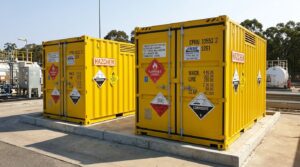
Table of Contents
- Identify the dangerous goods
- Choose suitable dangerous goods storage containers
- Check segregation and compatibility
- Plan ventilation and fire safety
- Consider spill containment and drainage
- Check signage, access and workplace procedures
- Confirm Australian compliance requirements
- Buying checklist and frequently asked questions
1. Identify the Dangerous Goods
Before choosing a storage container, establish exactly what materials will be stored, how much will be held and how the products will be handled.
Different substances create different hazards. Flammable liquids, oxidising agents, corrosive chemicals, toxic substances and compressed gases cannot all be treated as if they require the same storage conditions.
Start by reviewing each product’s current Safety Data Sheet (SDS). Pay particular attention to information about hazards, safe handling, storage conditions, incompatibilities, exposure controls and emergency measures.
Record the following details:
- The substance name and hazard classification.
- The quantity and type of packaging.
- Required temperature or environmental conditions.
- Known incompatibilities with other stored substances.
- Potential fire, health and environmental hazards.
- Whether the substance requires special handling or storage controls.
The quantity stored can affect the controls that apply. Seek competent advice if you are unsure how a product is classified or what storage arrangement is appropriate.
2. Choose Suitable Dangerous Goods Storage Containers
The right dangerous goods storage containers Australia businesses need depend on the hazards and intended use. A conventional freight container may provide a secure enclosure, but it may not have the engineering features needed for hazardous materials.
Before selecting a unit, establish whether the project needs a purpose-designed dangerous goods store rather than a standard container conversion.
Features that may be required, depending on the substance and applicable rules, include:
- Chemical-resistant flooring or surfaces.
- A compatible spill-containment system.
- Suitable ventilation or engineered exhaust.
- Fire-resistant construction or other fire protection.
- Secure doors and controlled access.
- Appropriate safety signage.
- Electrical equipment suitable for the hazardous atmosphere, where applicable.
- Storage arrangements designed for the particular goods.
Do not assume that adding a lock, shelving or a warning sign makes a standard container compliant. The entire storage system must be suitable for the materials and risks involved.
For general container options, browse our shipping containers for sale. Confirm suitability for dangerous goods with the supplier and an appropriately qualified specialist before ordering.
3. Check Segregation and Compatibility
Some dangerous goods can react dangerously when they come into contact with one another. Examples include substances that react with water, incompatible acids and bases, oxidising agents and combustible materials.
Segregation requirements depend on the classifications, quantities, packaging and applicable rules. Separate cabinets, compartments, barriers or independent storage areas may be necessary.
Before arranging the storage layout:
- Check the SDS for incompatibilities.
- Identify goods that must be stored separately.
- Keep containers stable and protect them from damage.
- Provide enough room for inspection and safe handling.
- Avoid storing incompatible substances together simply because they fit in the same unit.
- Establish procedures for damaged or leaking packages.
A storage plan should be based on the actual inventory, not just the container’s available floor space. Have the proposed arrangement reviewed by a competent dangerous goods or workplace safety professional.
4. Plan Ventilation and Fire Safety
Ventilation and fire safety need careful consideration when storing hazardous substances. Certain vapours can accumulate inside enclosed spaces, while some materials can intensify fires or release hazardous products when heated.
The correct solution depends on the materials, their quantities, packaging and the design of the storage system.
Consider whether the proposed store needs:
- Natural or mechanical ventilation designed for the hazards.
- Controls to prevent dangerous vapour accumulation.
- Suitable electrical equipment and ignition-source controls.
- Fire detection, extinguishing or suppression provisions.
- Separation from buildings, boundaries and ignition sources.
- Emergency access and safe evacuation arrangements.
Do not cut ventilation openings into a container or install fans without understanding the relevant risks. Ventilation design can affect fire safety, worker exposure and the spread of hazardous vapours.
A specialist should assess the proposed configuration where the substances or storage conditions present significant hazards.
5. Consider Spill Containment and Drainage
Leaks and spills can expose workers, damage property and contaminate soil or waterways. Dangerous goods storage may therefore require a suitable containment system and a plan for handling spills.
The required capacity, materials and design depend on the substances, packaging, quantity and applicable requirements. Some chemicals can damage ordinary steel, coatings, seals or flooring, so material compatibility matters.
Check whether the proposed store needs:
- A bunded floor or other secondary containment.
- Chemically compatible surfaces and seals.
- Protection against uncontrolled discharge to stormwater.
- Safe procedures for collecting and disposing of spills.
- Suitable spill-response equipment.
- Inspection and maintenance arrangements.
Do not direct contaminated liquids into stormwater drains or onto the ground. Establish a safe response procedure that accounts for the chemical hazards and relevant environmental obligations.
For outdoor installations, also consider rainfall, site drainage and the risk of contaminated runoff.
6. Check Signage, Access and Workplace Procedures
Appropriate signage and workplace procedures help workers identify hazards and respond safely. The exact signage, labelling and emergency information depend on the goods stored and the applicable workplace and dangerous goods rules.
Before using a storage unit, check:
- Required dangerous goods signs and labels.
- Access restrictions and key control.
- Safe movement of drums, cylinders or packaged chemicals.
- Emergency contact information and response procedures.
- Availability of relevant SDS documents.
- Worker training and personal protective equipment.
- Inspection schedules and reporting procedures.
Keep access routes clear and ensure the storage arrangement supports safe handling. Procedures should explain what workers must do if a package leaks, a fire occurs or someone is exposed to a substance.
Storage controls should be reviewed when the inventory changes. A store suitable for one chemical may not be suitable for another.
7. Confirm Australian Compliance Requirements
Dangerous goods storage obligations can depend on the state or territory, the type and quantity of substances, the workplace, the storage design and the activities taking place.
Requirements may involve workplace health and safety laws, dangerous goods legislation, fire safety rules, environmental controls and local planning or building requirements. Some industries and substances may also be subject to specific standards or approval conditions.
Useful starting points include:
- Safe Work Australia’s guidance on hazardous chemicals.
- The applicable state or territory workplace safety regulator.
- Relevant dangerous goods and fire authorities.
- Your local council or planning authority, where site approval is relevant.
- A qualified dangerous goods storage designer or safety consultant.
Safe Work Australia provides national guidance, but individual state and territory regulators administer their own legal requirements. Check the current rules for the actual location of your proposed installation.
Do not rely on a general online checklist as proof of compliance. Obtain project-specific advice before installing or using a dangerous goods store.
8. Buying Checklist and Frequently Asked Questions
Dangerous goods storage buying checklist
Before ordering a storage unit, confirm the following:
-
The full inventory and quantities are documented.
-
Current Safety Data Sheets are available.
-
The proposed unit is suitable for the specific hazards.
-
Segregation and chemical compatibility have been assessed.
-
Ventilation and fire-safety requirements are established.
-
Spill containment and drainage controls are suitable.
-
Required signage, labels and access controls are identified.
-
Site access, placement and emergency access are considered.
-
Applicable approvals and legal obligations have been checked.
-
Inspection, maintenance and emergency procedures are prepared.
Can I use a standard shipping container for dangerous goods?
Not automatically. A standard shipping container may provide an enclosure, but dangerous goods storage can require specialised design features. Suitability depends on the materials, quantities, risks and applicable rules.
Do dangerous goods storage containers need ventilation?
Ventilation requirements depend on the substance and storage arrangement. Some materials may require carefully designed ventilation or other engineered controls. Seek professional advice rather than modifying a container without a risk assessment.
Is bunding required for dangerous goods storage?
Secondary containment may be required depending on the materials, quantities and applicable rules. The design should also account for chemical compatibility and the risk of contaminated liquid reaching stormwater or the environment.
Can different chemicals be stored in one container?
That depends on their compatibility and the applicable segregation requirements. Some substances must be separated. Review the SDS information and obtain a competent assessment before storing different chemicals together.
Who should assess a dangerous goods storage installation?
Depending on the project, appropriate advisers may include a dangerous goods storage specialist, workplace safety professional, fire safety engineer, structural engineer or relevant regulatory authority.
Find the Right Container Solution for Your Project
Selecting a dangerous goods storage solution starts with understanding the materials, quantities, site conditions and compliance requirements. A standard freight container should not be treated as a ready-made hazardous materials store without a suitability assessment.
Container Supply Hub supplies container-based products for Australian projects. Browse our shipping container range or contact our team to discuss your general container requirements.
For dangerous goods applications, confirm the technical specifications and regulatory suitability of any proposed unit with a qualified specialist before purchase, installation or use.
Important: This guide is general information, not a certification of compliance. Requirements vary by substance, quantity, workplace and jurisdiction. Always confirm the current rules with the relevant regulator and qualified professionals.